A that Graham Platner once sexually assaulted a woman he was dating has rocked the U.S. Senate race in Maine and cast fresh doubt on Democrats鈥� path to a Senate majority.
Republicans currently have a 53-47 advantage in the Senate, and Maine is viewed as a necessary win for Democrats to gain the minimum of four new Senate seats.
But now there鈥檚 a question of whether Platner, who denied the allegation, will remain on the ballot and, if he does, whether he can defeat five-term Republican Sen. Susan Collins.
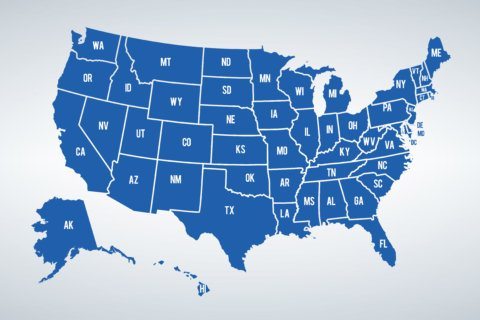
Here鈥檚 a closer look at the top races that Democrats are targeting.
Democrats see some pickup opportunities
ALASKA: Former Democratic Rep. against incumbent Republican Sen. Dan Sullivan has buoyed her party.
Peltola, one of a handful of Democrats who鈥檝e won in Republican dominated states, was the first Alaska Native to serve in Congress, winning special and regular elections in 2022 for the state鈥檚 only House seat.
At center stage for the state鈥檚 Aug. 18 primary is drama involving a man running with the same name and party affiliation as Sullivan. The state supreme court the challenger is qualified to be on the ballot.
Peltola鈥檚 campaign and state Democrats have denied Sullivan’s allegation that they’re working with the challenger to cause confusion..
MAINE: Platner catapulted to the Democratic nomination . Senate Democratic Leader Chuck Schumer initially backed sitting Gov. Janet Mills but reluctantly aligned behind Platner — until Monday鈥檚 latest bombshell accusation.
Now, Schumer and many Democrats are pushing for Platner to withdraw. If he does that by July 13, Maine Democrats can put a replacement on the ballot. If not, Platner could face Collins with minimal national party support.
If Platner drops out, his replacement could meet a similar challenge to what presidential candidate Kamala Harris faced in 2024, when she had a late start to appeal to a general election audience without having won the nomination in a competitive primary.
Meanwhile, Collins has won elections for 30 years despite no Republican presidential nominee, including President Donald Trump, winning Maine since 1988.
NORTH CAROLINA: one of their prize recruits with former Gov. Roy Cooper, who has never lost a statewide election through four terms as attorney general and two as governor. Republicans answered with Trump鈥檚 , Michael Whatley, who鈥檇 previously served as state GOP chairman and as the Republican National Committee chairman.
Whatley was viewed as a prodigious fundraiser and ideal Trump surrogate in a state the president carried three times, and he has history on his side — Democrats have won just two U.S. Senate races and one presidential contest in North Carolina in the last three decades.
Yet Cooper won governors races in two of Trump鈥檚 three presidential cycles and is leveraging his centrist image at a time when independents have . That leaves Whatley with the difficult tasks of satisfying Trump’s core supporters without alienating other voters; introducing himself to voters who don鈥檛 know him; and convincing enough North Carolina voters that they鈥檝e been wrong about Cooper for decades.
OHIO: Democrats are to unseat Republican incumbent Jon Husted in what鈥檚 shaping up to be another expensive contest in the state 鈥� its third in four years.
The Senate Leadership Fund, a GOP super PAC, has pledged $79 million to defend Husted, a former lieutenant governor appointed to fill the seat after JD Vance became vice president.
Brown served three terms in the Senate before losing a tough reelection contest in 2024.
Ohio has steadily trended Republican. But Brown won previously as an advocate of unions and the working class, and Democrats believe he can attract some of the voters who鈥檝e helped Trump win the state three times.
Underdogs could offer surprises
IOWA: The state, which Trump won three times gives Democrats an opportunity to flip a seat with two-term Republican .
Democratic Iowa state Rep. Josh Turek Trump-endorsed Republican U.S. Rep. Ashley Hinson.
Turek is a relative newcomer to elected office and has pointed to his experience winning in a red state House district as proof he could appeal to independent and moderate Republican voters in November.
Hinson is a three-term House incumbent representing northeastern Iowa, and claims Trump needs a fighter who would 鈥渁lways have his back.鈥�
TEXAS: State Rep. , a 37-year-old seminarian, has become a national fundraising phenomenon.
Talarico faces the scandal-ridden Republican nominee Ken Paxton. The Texas attorney general has weathered an impeachment attempt by his own party, a yearslong corruption investigation and public airing of his martial difficulties. Through all that, Paxton has won multiple reelections.
Democrats were buoyed by their primary turnout of about 2.3 million eclipsing Republicans鈥� 2.2 million, something that hasn鈥檛 happened since the state flipped to Republicans in the 1990s. But the challenge for Talarico is turning that momentum into a racially, ethnically and geographically diverse coalition in November.
The seats Democrats have to hold
GEORGIA: Sen. is the only Democratic senator running for reelection this year in a state Trump won in 2024.
He had no primary opposition, and he鈥檚 been a fundraising force with more than $30 million cash-on-hand as he entered the general election campaign. Ossof has attracted national attention with his unapologetic broadsides against Trump.
is playing catchup after winning a bruising GOP primary runoff. He must navigate skeptical Republicans who believe he鈥檚 too conservative or controversial for this battleground state. Collins repeats Trump鈥檚 false claims that the 2020 election was rigged, and he鈥檚 also facing a House ethics inquiry over allegations that he misused taxpayer money to pay the girlfriend of a former top aide.
Collins鈥� strongest line of attack against Ossoff comes on immigration. Collins sponsored the Laken Riley Act, named for a Georgia nursing student killed by a Venezuelan man in the U.S. illegally. The 2025 law, among other provisions, requires immigrants accused of certain crimes to be detained by federal law enforcement.
Ossoff voted for that legislation after Trump returned to the White House. The senator had previously voted, along with all Senate Democrats, to block consideration of an earlier Republican version 鈥� offered as an amendment to a 2024 spending bill 鈥� that would have prohibited undocumented immigrants accused of certain crimes from obtaining legal status. Collins and Republicans frame those votes as Ossoff flip-flopping on immigration enforcement.
MICHIGAN: Democratic Sen. opens up a seat the party must hold in a key presidential battleground that Trump won twice and former President Joe Biden carried in 2020.
The Aug. 4 Democratic primary pits moderate Haley Stevens against progressive Abdul El-Sayed. It was a three-way race until Mallory McMorrow, who had backing from some progressive Democratic senators, .
Stevens and El-Sayed have split support among Democratic senators. Stevens has the support of Minority Leader Chuck Schumer, while El-Sayed has support from Sen. Bernie Sanders and other progressives.
Stevens has also benefited from heavy outside spending, including nearly $8 million from a super PAC affiliated with the American Israel Public Affairs Committee.
El-Sayed, a former Wayne County health director, has run on issues like Medicare for All and halting all U.S. weapons transfers to Israel. He with popular-yet-controversial streamer , who has millions of followers online and has said things such as that 鈥淎merica deserved 9/11.鈥�
The winner is expected to face Republican Mike Rogers, who lost to now-Sen. Elissa Slotkin, a Democrat, in 2024.
Copyright © 2026 The Associated Press. All rights reserved. This material may not be published, broadcast, written or redistributed.