WASHINGTON 鈥� Fans of the Washington Nationals are all too aware of how crucial the health of a pitching staff is to a team鈥檚 success.
Perhaps the most infamous handling of a post-Tommy John surgery Major League pitcher was Stephen Strasburg鈥檚 shutdown at his prescribed innings limit in the fall of 2012, as the Nats were fighting for a playoff spot. But the local team鈥檚 connection to the tenuous ulnar collateral ligament 鈥� the natural shock absorber in the elbow that allows humans to throw a five-ounce white orb into triple digits of miles per hour 鈥� goes far beyond just one pitcher.
You could write a whole book about the money being spent at the every level of the game, the pressure to throw harder and harder, younger and younger, the way this is breaking down arms earlier and earlier, derailing promising careers at every level of the game. So that鈥檚 what Yahoo baseball writer Jeff Passan did. His tome, 鈥�,鈥� raises as many questions as it answers as it explores baseball鈥檚 attempt to reconcile the spike of catastrophic elbow injuries at all levels of the sport.
But the most basic question is this:
鈥淲hy does baseball spend a billion-and-a-half dollars every year on something it doesn鈥檛 understand?鈥�
The answer begins as far away from the big leagues as you can get and still be playing baseball.
How young is too young?
The United States Specialty Sports Association . As in, four years old and younger. Let that sink in for a minute. There are national rankings for four-year-olds.
鈥淭he youth baseball system right now is broken,鈥� Passan said in our chat, which you can listen to in full at the top of the page. 鈥淎 lot of the injuries that are happening these days can be traced back to things that were done as early as eight, nine, 10 years-old.鈥�
This isn鈥檛 as surprising when you consider that Perfect Game, the top youth showcase circuit in the country, clocks 11 year olds on radar guns at their tournaments. They attract all of the top talent, including Bryce Harper. His rise to prominence in the age of YouTube led to the tidal wave of hype that has preceded his every move.
Here he is at one of their showcase events in the summer of 2008. The caption on the video asks 鈥淏ryce Harper … Best High School Player?鈥� Based on when it was shot, he would have been 15.
https://www.youtube.com/watch?v=khFny2WiP3A
Passan calls it 鈥渢he commodification of the child.鈥� He says the most shocking statistic he came across in his research was a study between 2007 and 2011 on all the Tommy John surgeries that took place to repair torn UCLs. A full 56.8 percent of them 鈥� more than half 鈥� were on 15 to 19 year olds.
鈥淭hat is a bad sign,鈥� he said. 鈥淭hat is a sign that this injury is trending younger, that arms are being hurt younger than ever. And baseball needs to do something to stop it.鈥�
The epidemic
The word 鈥渆pidemic鈥� gets thrown around where it doesn鈥檛 belong sometimes, but the spike in Tommy John surgeries absolutely qualifies. And the crisis isn鈥檛 abiding anytime soon.
Just over a week into the 2016 season, three players have already suffered catastrophic arm injuries, with Oakland starter Felix Dubront heading for Tommy John surgery a day after Atlanta reliever Daniel Winkler had his elbow fracture mid-pitch.
As if to irrefutably drive the point home, during the window I was on the phone with Passan Tuesday afternoon it was reported that over the weekend and will wear the elbow stitch scar the rest of his career.
That the made it .
Damaged goods
Roughly 80聽percent of pitchers who need Tommy John surgery are able to come back and pitch again. But if you require a second surgery, the recovery rate plummets. Daniel Hudson, one of the pitchers Passan follows in his book, finally returned to the big leagues after missing the better parts of three seasons.
As it turns out, of all the attributable reasons for future arm injuries 鈥� high innings counts, high individual game pitch counts, throwing all year round 鈥� the strongest correlation is to pitchers who have been injured already.
The Nationals surely know this. Nevertheless, they have used first-round picks on both Lucas Giolito in 2012 and Erick Fedde in 2014, both with torn UCLs. What they have not done, to date, is even intimate that they would spend a nine-figure sum on a long-term extension for a hurler on his second elbow. They let Jordan Zimmermann walk this past offseason, and there has been when he hits free agency this winter.
Strasburg made 64 starts between 2013-14, as many as Madison Bumgarner (only 15 MLB pitchers made more). He battled minor injuries last season, making just 23 starts, but was one of the best pitchers in baseball from August on, posting a 1.90 ERA and striking out 92 batters while walking just eight in his final 66.1 innings of the year.
Understanding that, does the 2012 shutdown seem like it was a good idea?
鈥淗onestly, no, I don鈥檛 think you can say definitively that the shutdown worked,鈥� said Passan, but is quick to note that he doesn鈥檛 mean it hasn鈥檛 worked either.
鈥淲e just don鈥檛 know still. And we don鈥檛 have any of those definitive markers. We don鈥檛 have any sort of way to capture data that might tell us whether there was extra strain and stress on his elbow 鈥� in (Matt) Harvey鈥檚 case during October last year that Strasburg might not have seen.鈥�
Weird science
Nearly two years ago, , which had developed a diagnostic system to evaluate injury to soft tissue, mostly the muscles that support ligaments like the UCL and ACL. The company had met with a Major League organization, but had not come to an agreement. Passan was skeptical of the system鈥檚 effectiveness. After all, he was smack in the middle of what would become a three-and-a-half year expedition into the world of pitching and how we treat the arm.
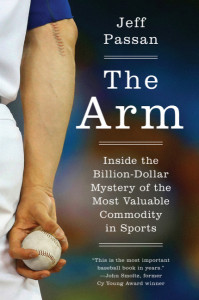
Attacking the issue from the other side is a training compound in Kent, Washington called Driveline Baseball. Featured heavily in 鈥淭he Arm,鈥� Driveline boasts Cleveland Indians鈥� cerebral hurler Trevor Bauer as a client and an advocate. By using nontraditional methods of trying to improve both velocity and accuracy, they are trying to build athletes capable of competing in today鈥檚 meat market and rehabilitating those who thought an injury had derailed them permanently.
Kyle Boddy, who runs Driveline, was getting close to hiring a medical graduate student, James Buffi, who was taking a novel approach at trying to diagnose forearm stress to help expand his understanding and improve his methods. They were two outsiders whose combined work could have possibly shed more light on the game鈥檚 biggest mystery. But before they could ever work together, Boddy got outbid.
By the Los Angeles Dodgers.
Follow the money
鈥淚t鈥檚 going to be interesting to see if there are any breakthroughs,鈥� Passan said. 鈥淎nd honestly, we probably won鈥檛 know if there are.鈥�
The Dodgers snapped up Buffi as part of the brain trust they鈥檙e building in the front offices at 1000 Vin Scully Avenue. Other teams, including the Indians, Tampa Bay Rays, and a smattering of others, are each investing in their own medical research staffs to try to get ahead of the problem, or at least ahead of the curve. The Nationals in the offseason.
While it鈥檚 good that teams are racing to be on the forefront of discovery, in a league where every edge can mean millions of dollars in revenue, of fractions of a win that can be the difference between making the playoffs or not, organizations aren鈥檛 exactly inclined to share. Passan is hopeful there will be a broader push to work together.
鈥淭his is one of those scenarios where the greater good might actually be best of all,鈥� he said.
Part one of such a push was an agreement made by five clubs to allow MLB to track the members of their 2014 draft classes. It will be years before a full data set is complete, but the findings could help soften the idea of preliminary diagnostic testing for every player before the season to help get a baseline level of health, aiding trainers in potentially seeing injuries developing before they happen in the future.
It may seem like baseball would jump at such an opportunity. But the MLB Players Association might offer some pushback 鈥� after all, more testing means less privacy, more potential reasons for teams to try to shy away from offering huge contracts.
Passan knows such a streamlined process is still likely several years off, but he鈥檚 hopeful the union would see the larger picture in the long run.
鈥淯ltimately, I think the MLBPA would be on board with something like this,鈥� he said. 鈥淭he [free agent] dollars should go to healthy players. That鈥檚 the best-case scenario.鈥�
How to protect your kids
鈥淯ltimately, I didn鈥檛 answer the question,鈥� Passan聽admits of his fundamental query. 鈥淏ecause even people who have dedicated their careers to this, who are far, far smarter than I will ever be, do not understand the arm or how it works.鈥�
When your favorite pitcher on your favorite team blows out his elbow, it can be incredibly disheartening. But the stakes are far higher when dealing when your own children. That was the impetus for Passan鈥檚 research in the first place, as his oldest son is reaching the kid-pitch level of youth baseball this year.
So after all his research, what would he recommend for fellow parents?
鈥淚 think you have to be willing to go against what modern American culture preaches these days, and that is competitiveness at a very young age,鈥� he said.
When it comes to pitching, that means teaching command over velocity, to throw strikes instead of trying to impress with speed. It means focusing on a fastball first and only, eventually adding a change-up.
Despite recent claims that curveballs aren鈥檛 as harmful to young arms as once thought, Passan said he鈥檚 鈥渟till not letting [his son] throw a breaking ball until he can shave.鈥�
Because ultimately, until we know more, it鈥檚 all just an educated guess.